Cars x Crocs Classic Clog "Dinoco": a clog with a spoiler and a scene only fans remember
Sep 16, 2026·Soleback Team

Six models across four use cases, grip test figures and when the membrane gets in the way
Soleback Team
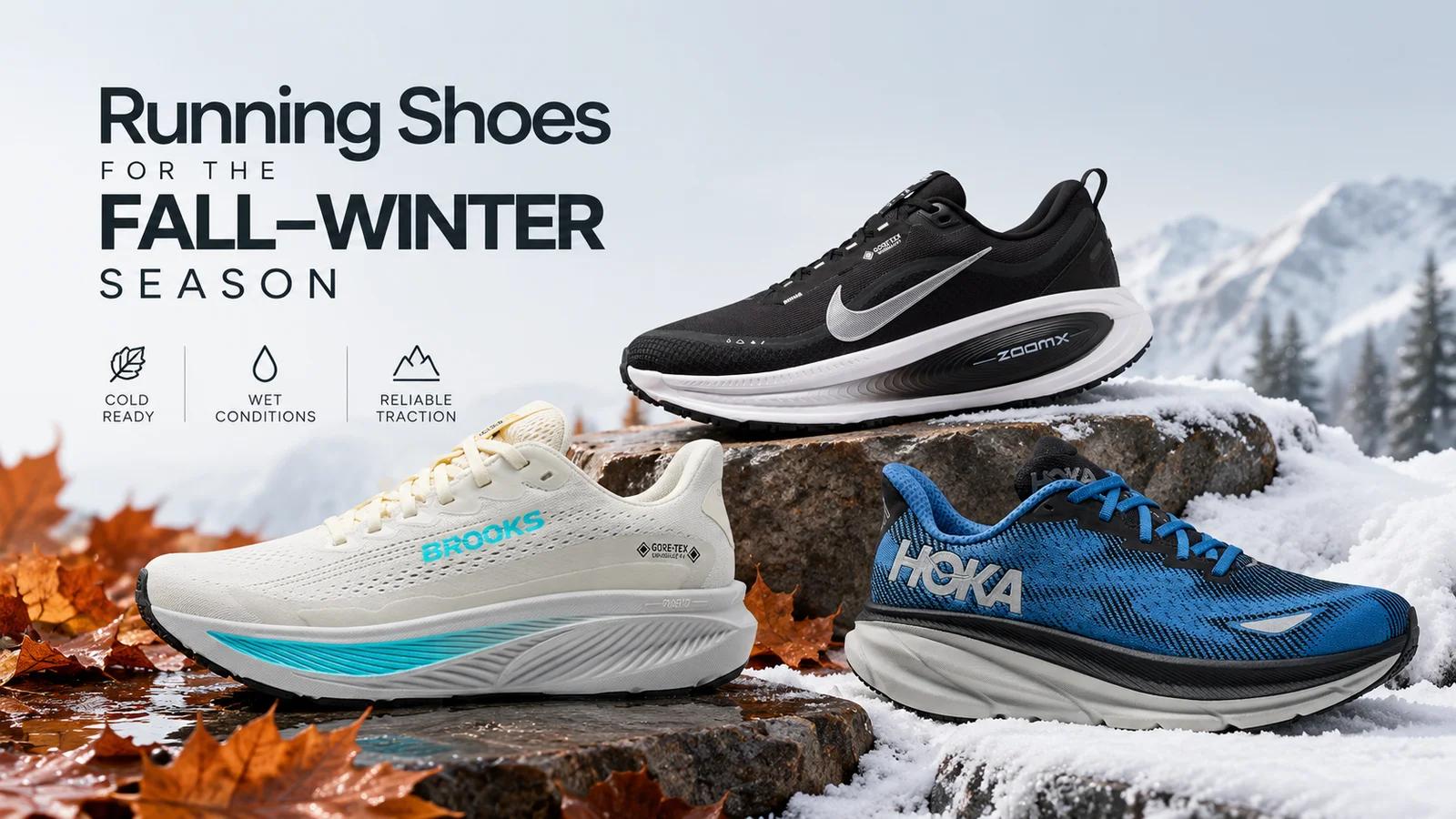
Running in winter asks different things of a shoe than running in summer. Cushioning drops down the list, and its place is taken by grip on wet ground and ice, plus protection from water. Below are the models that actually deliver that, split across four use cases.
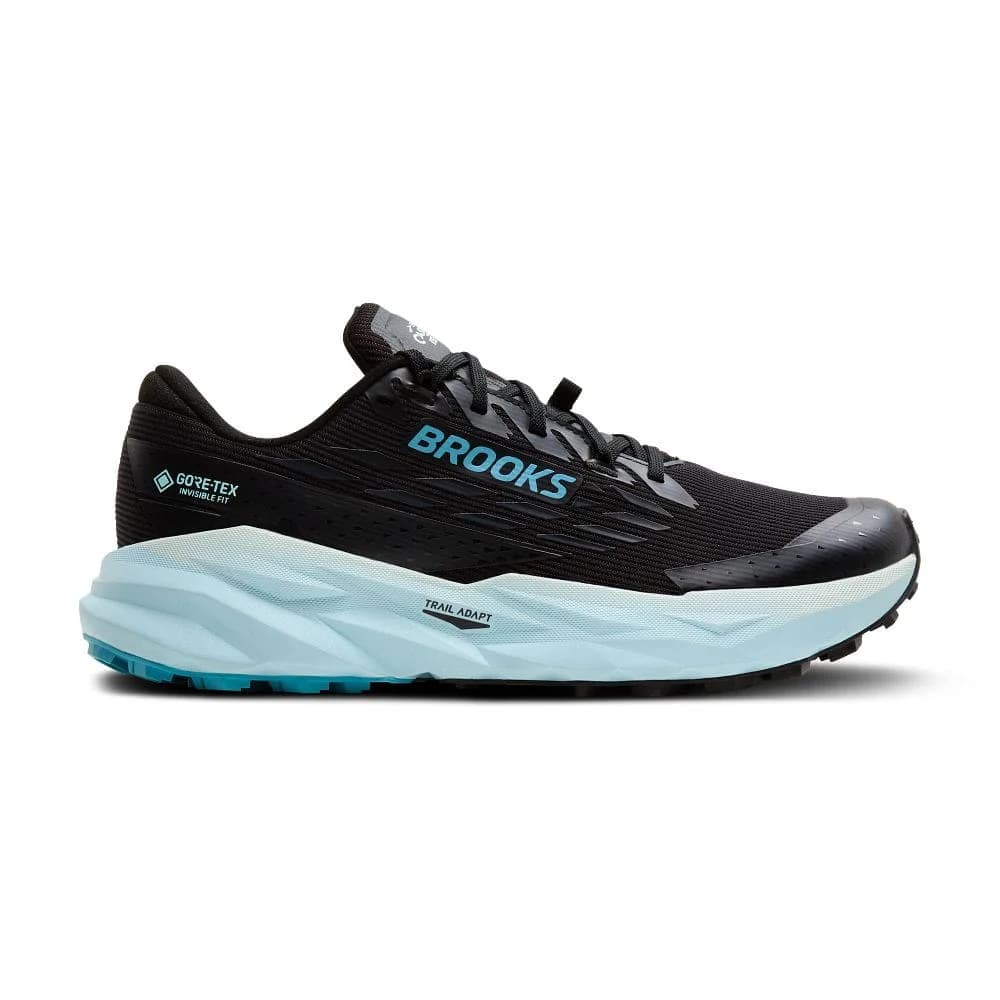
Brooks Ghost 17 GTX has the best grip in testing: 34 percent above average on wet concrete
Nike Vomero 18 GTX offers the best cushioning, particularly for heel strikers
HOKA Clifton GTX for anyone wanting more traction without switching to a trail shoe
Saucony Peregrine 15 GTX for mud, snow and off-road, with the option to fit screws
GORE-TEX versions typically cost about a fifth more and are heavier, stiffer and less breathable
This question belongs before the model choice, because the answer changes everything.
A GORE-TEX membrane is not free. Lab testing found the Brooks Ghost 17 GTX earned the lowest possible ventilation score, one out of five, because neither light nor smoke passes through the upper. In winter that is an advantage, since body heat stays inside the shoe. Above freezing and at pace it becomes a drawback, because your foot overheats.
Then there is price. The membrane version typically costs around a fifth more than the same model without it. That is a premium for a single property, so it is worth being sure you need it.
When it is worth it: if you run around freezing and below, in rain, wet snow or through puddles.
When it is not: if your winter is mostly above freezing on dry pavement. A regular model with a good outsole and a thicker sock serves you better.
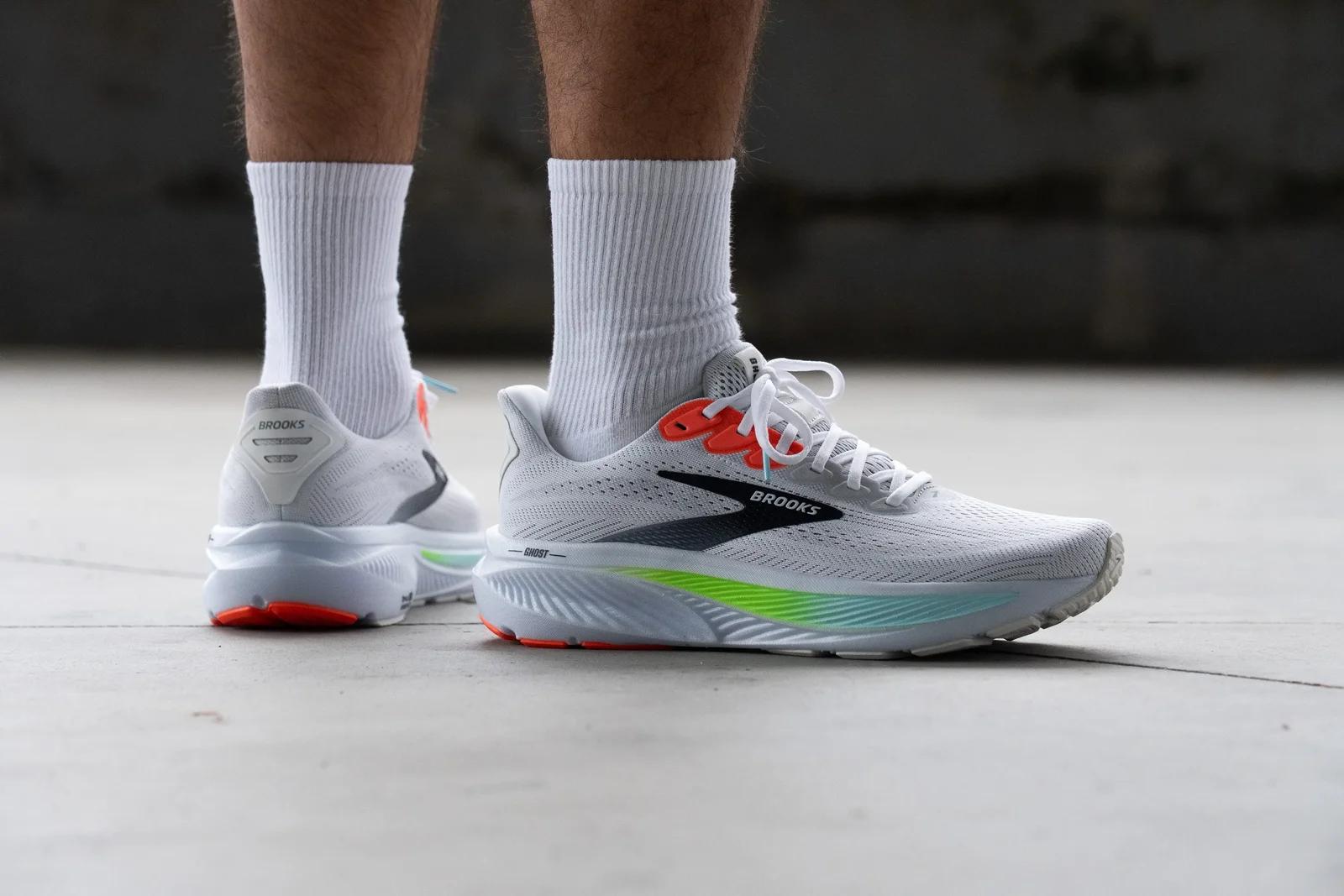
The first choice if slippery ground is your main problem.
The RoadTack rubber produced a friction coefficient of 0.67 on wet concrete, 34 percent above average. That is the highest figure among winter shoes and translates into real confidence on icy paths and fresh powder.
The grip does not come at the expense of durability. In abrasion testing the outsole lost just 0.5mm.
The fit is forgiving, measuring 97.6mm at the widest point, 2.4mm above average. That matters in winter, because a thicker sock fits without pinching.
The downside: the cushioning targets comfort rather than responsiveness. At faster paces the shoe does not help, so pick something else for intervals.
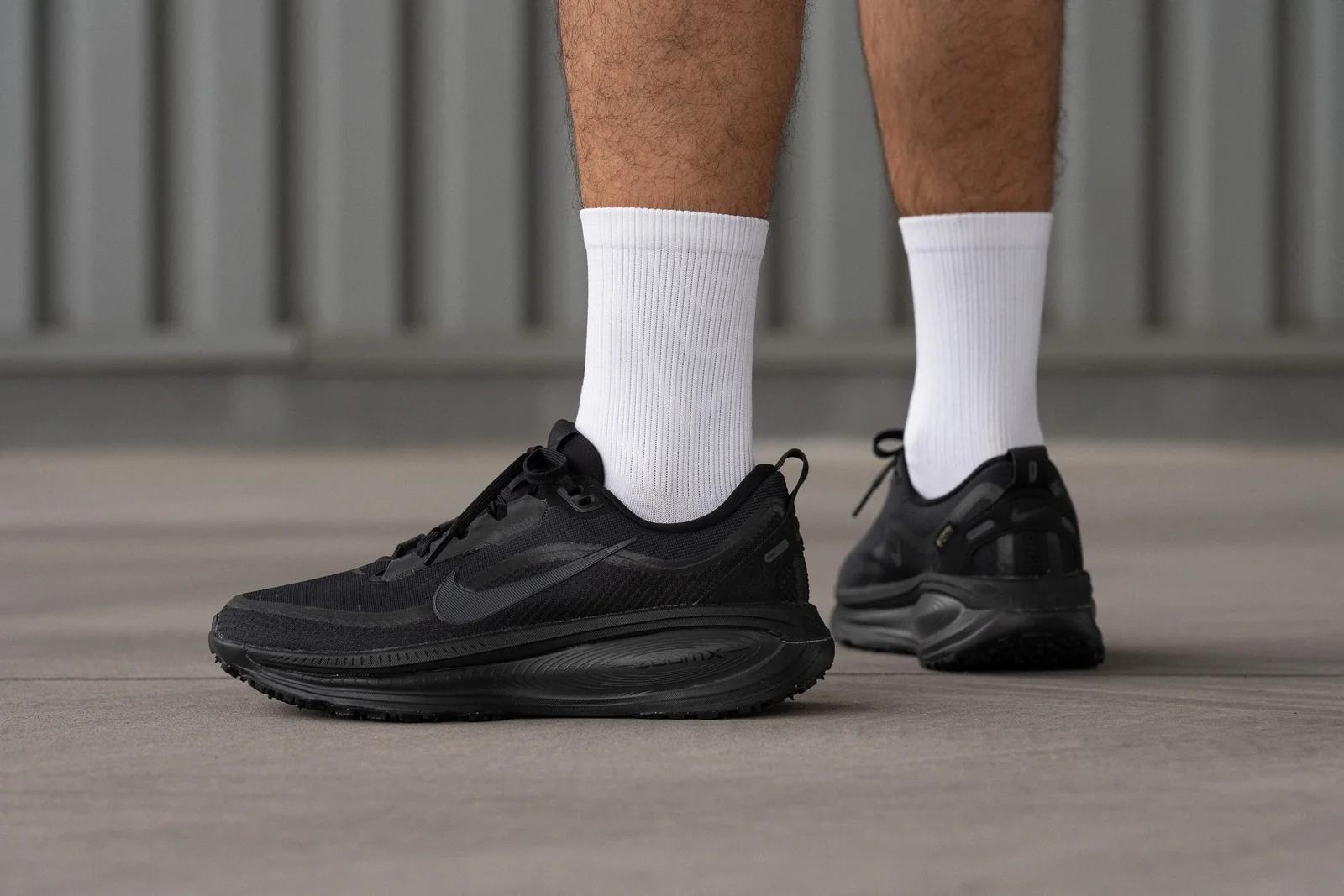
The best cushioning among membrane shoes, especially for runners landing on the heel.
The heel measures 42.2mm, above average, and the shock absorption rating reaches 145. In practice that means hard landings and underfoot debris are noticeably muted.
The Storm-Tread outsole is built for wet conditions and channels water away. Friction on wet concrete comes in at 0.64, 23 percent above average.
The downside: the same as the Brooks. The midsole returns little energy, so the shoe shines on steady, easy miles rather than tempo work.
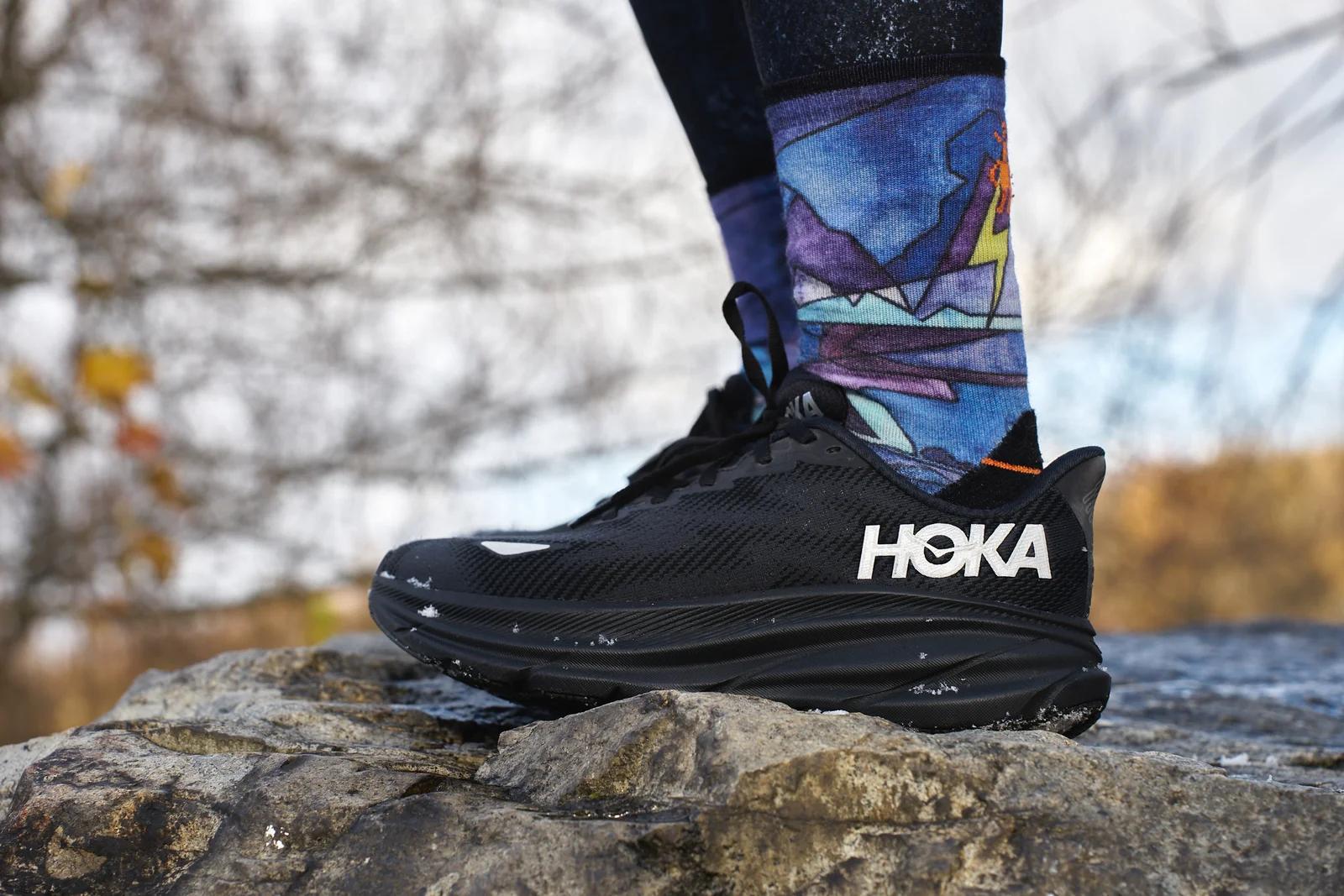
The answer for road runners wanting a little more traction without moving to a trail shoe.
It is the familiar Clifton made fully waterproof with a GORE-TEX Invisible Fit membrane that adds no bulk. The Durabrasion outsole carries nubs called Traction Pods, protruding slightly more than a standard tread but far less than trail lugs.
The downside: the GTX version is stiffer and heavier than the standard Clifton, and grip on ice remains ordinary. This is a shoe for wet tarmac, not for frozen paths.
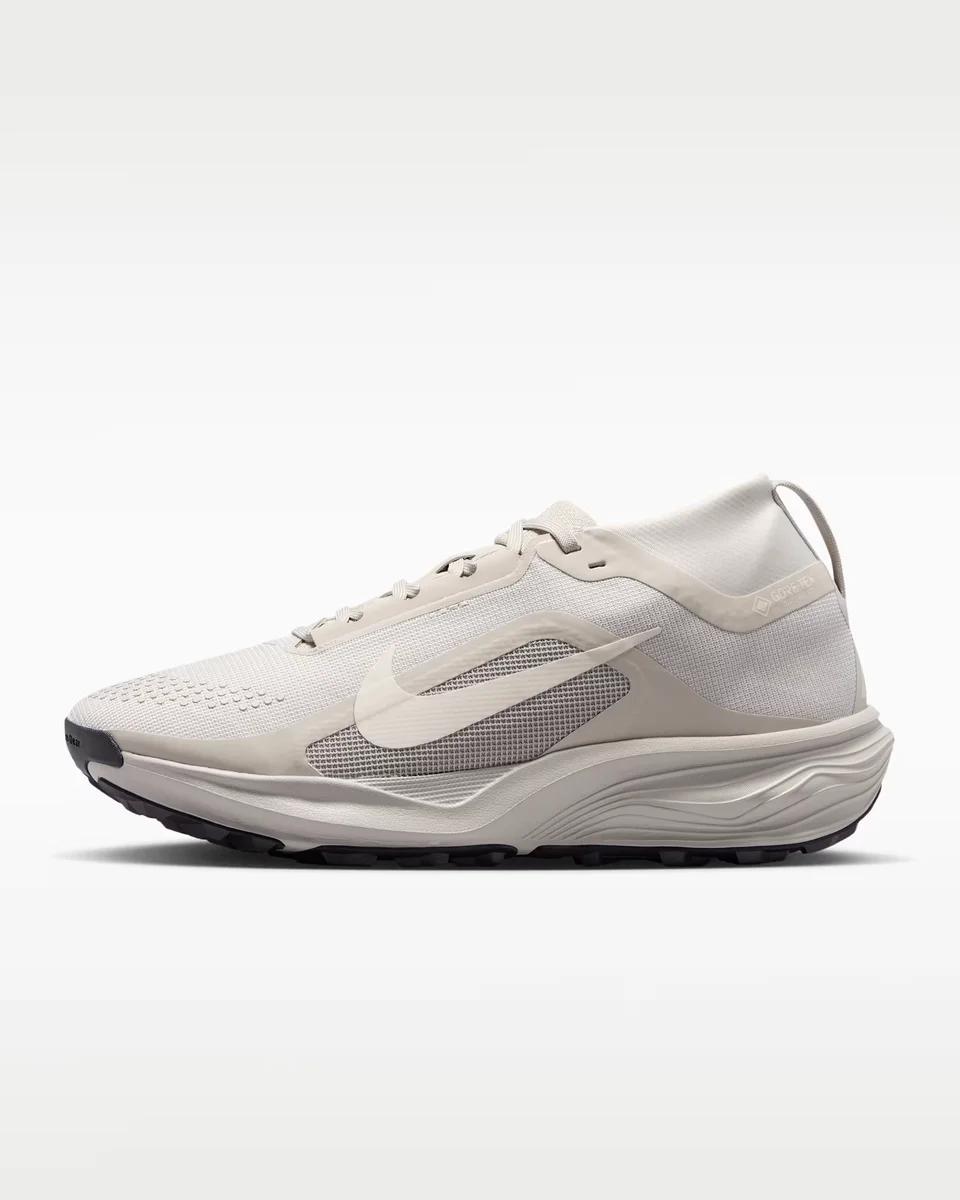
The best compromise if your route starts in town and finishes in a park or wood.
A GORE-TEX upper, a higher gaiter at the ankle blocking snow, and a tongue with ventilation cutouts. The tread is pronounced enough to hold in snow and shallow enough not to get in the way on concrete.
The lightweight foam still returns usable energy, so picking up the pace is possible, which is not a given in this category.
A trail shoe with a rock plate in the midsole, which incidentally adds stability. This generation is around 6 grams lighter than the Cascadia 18, and the drop has fallen from 8mm to 6mm.
Worth knowing: the membrane version is noticeably dearer than the standard one, and this generation also rose against the previous GTX.
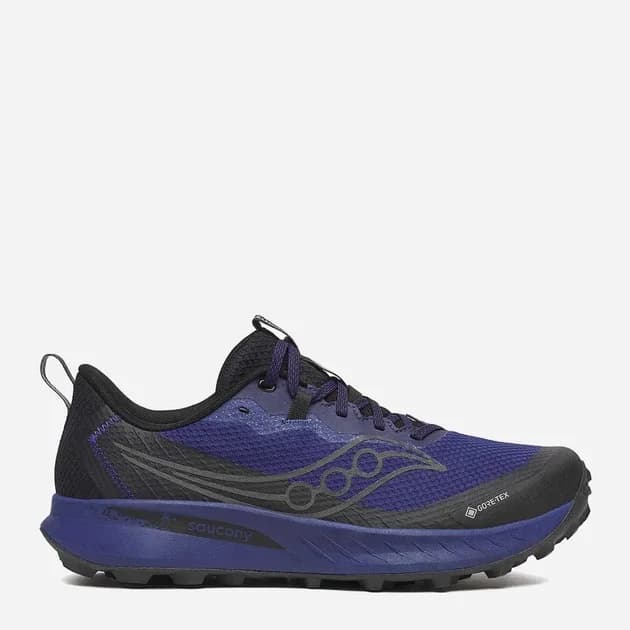
The strongest option if you run where there is no tarmac at all.
The outsole carries aggressive rubber lugs in a chevron pattern, tightly spaced from heel to toe. They are what deliver confidence in the worst conditions, and reviewers name this model as the one to reach for in heinous terrain.
The GORE-TEX Invisible Fit membrane keeps the foot dry without adding bulk, and the shoe sits low to the ground, which helps stability.
Two details worth knowing: it accepts screws, and the manufacturer has marked where to put them. A D-ring at the toe and a heel loop also make gaiter attachment straightforward.
This generation has a softer midsole and a more comfortable upper than before.
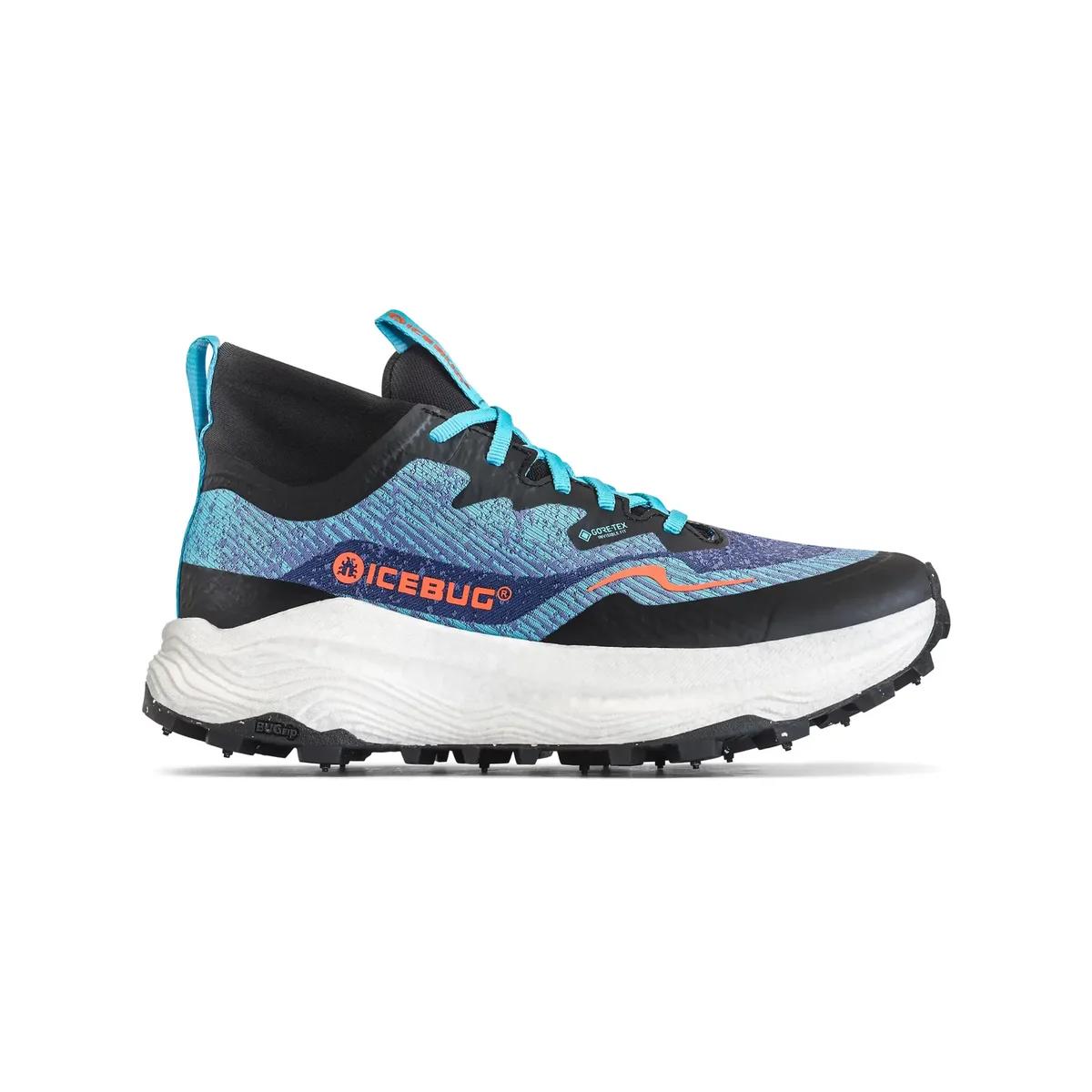
If your winter genuinely involves frozen paths, an ordinary membrane shoe will not do.
This model has a low gaiter integrated into the upper, keeping snow and debris out around the ankle without feeling fully enclosed. BUGrip means studs embedded in the outsole.
The downside is substantial: this is a very heavy shoe, around 354 grams, and you feel it from the first stride. Speed-oriented runners will be disappointed.
Reviewers put it neatly: when running on ice the goal is not speed but getting home in one piece. For that, this shoe beats anything else.
Two changes that may catch out anyone returning after a break.
The Saucony Triumph 23 no longer has a GORE-TEX version. The nearest replacement offers similar cushioning at a similar weight, but without a wide-fit option.
The Saucony Kinvara stays in the range as a very light trainer, but it too lost its waterproof variant.
Mostly road, traction first: Brooks Ghost 17 GTX
Mostly road, cushioning first: Nike Vomero 18 GTX
Road, a little grip without trail lugs: HOKA Clifton GTX
Town plus park or woods: Nike Pegasus Trail GORE-TEX
Off-road, mud, snow: Saucony Peregrine 15 GTX
Genuine ice: Icebug Järv Gaiter BUGrip GTX
The retailers below stock running shoes from the brands listed, and buying through Soleback returns part of the order value:
On membrane running shoes, where prices start in the three-figure range, even a low percentage converts into a real amount, so comparing rates is worth the effort.
The click through Soleback has to be the last one before the shop, and cashback clears once the returns window closes.
Our promotions section is worth checking too, since GTX models usually come down in late winter as the season ends.
Take half a size up if you run in thick socks. The Ghost 17 GTX solves this with its broader fit, but most models do not.
A membrane does not replace tread. The Clifton GTX keeps your foot dry but will not help on ice. Waterproofing and grip are two different properties, and you need to decide which one is your problem.
Do not buy GTX as a year-round shoe. Above freezing the lack of breathability becomes tiresome. This is a seasonal shoe, not a replacement for your regular trainer.
The Brooks Ghost 17 GTX, with a friction coefficient of 0.67 on wet concrete, 34 percent above average.
Not always. It makes sense around freezing and below, and in rain or wet snow. Above freezing on dry tarmac it gets in the way, because the foot overheats.
Typically around a fifth more than the same model without it.
The Icebug Järv Gaiter BUGrip GTX, with studs embedded in the outsole. It is heavy, but in those conditions there is no sensible alternative.
The Nike Pegasus Trail does, thanks to its shallow tread. The Saucony Peregrine with its aggressive chevron lugs does not, because it wears down quickly on concrete.
No. The model lost its waterproof variant, as did the Kinvara.
In winter the choice comes down to one question: is your problem water or grip. They are two different things, and most buyers conflate them.
If it is water, any GTX version of your favourite model will do. If it is grip, the tread is what counts, and the strongest test figure belongs to the Brooks Ghost 17 GTX. And if we are talking about genuine ice, you need studs, and no road shoe substitutes for them.


Save on your next purchase
Browse our partner stores for cashback deals and voucher codes
Soleback Team
Author