StockX
Footwear
Coupons & deals

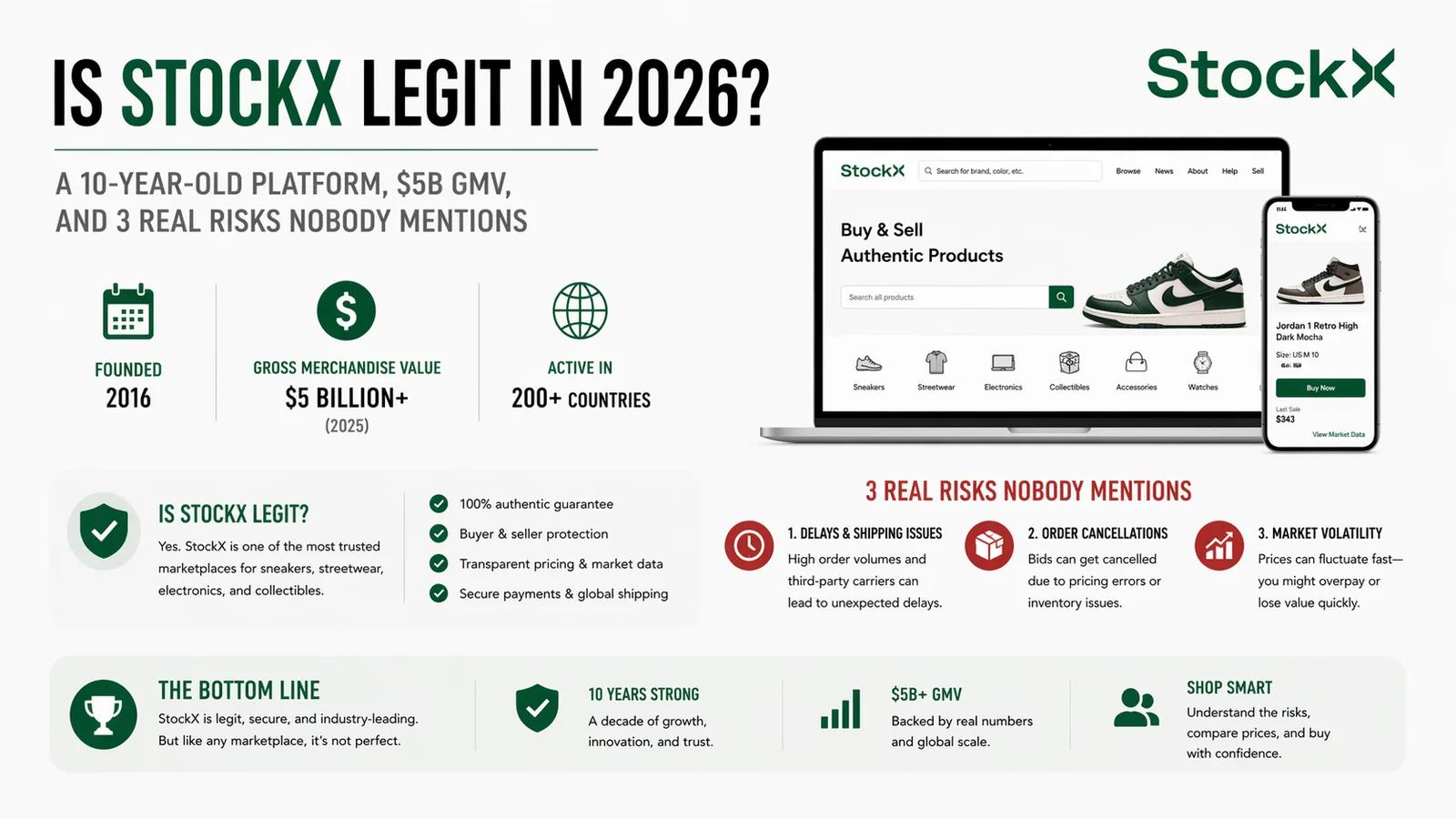
Is StockX legit in 2026? The honest answer, how authentication works, 3 real risks, and how Soleback cashback offsets part of the buyer fee.
Marcin
Short answer: yes, StockX is legitimate. Founded 2015 in Detroit, publicly audited, over $5B in lifetime GMV through 2025.
Every item passes in-house authentication in one of 10 global facilities before shipping to the buyer.
Real risks to know: buyer fees (9% to 13%), sizing errors, and used-item condition disputes.
Counterfeit rate on verified items is below 0.1% based on StockX's own 2024 transparency report, lower than eBay or local reseller pages.
On a $300 sneaker cop via StockX through Soleback, the buyer fee runs $27 to $39. Soleback kicks back 2% = $6, which offsets about 15 to 22% of the fee.
You type "is StockX legit" into Google and get a wall of Reddit threads, one YouTuber claiming they got a fake Jordan, two other YouTubers saying StockX saved them from a fake, and a handful of affiliate blogs that tell you StockX is perfect. None of that tells you what you actually need to know.
This piece does three things. It explains what StockX is in 2026 (company, scale, regulatory status). It lays out the authentication process with the detail level sneakerheads actually want. And it flags three failure modes that the fanboys don't talk about, with numbers from StockX's own disclosures and from aggregated buyer reports.
No affiliate lens. Soleback makes money when you buy through us, but we don't need you to think StockX is perfect. We need you to understand what you're paying for.
Founded 2015 by Dan Gilbert, Josh Luber, and Greg Schwartz. Headquartered in Detroit, Michigan. Private company as of April 2026, last valuation $3.8B in the 2021 Series E round. Profitable since 2022 according to their CFO comments at the 2025 Web Summit.
Lifetime gross merchandise value crossed $5B in early 2025. Across sneakers, streetwear, handbags, trading cards, collectibles, and electronics. Sneakers are still the largest vertical at roughly 60% of GMV.
Ten authentication facilities as of April 2026: Detroit (HQ), Los Angeles, Atlanta, London, Düsseldorf, Moose Jaw (Canada), Tempe (Arizona), Tokyo, Seoul, and Melbourne. Every item sold passes through one of these.
Regulatory status matters. StockX is registered with the SEC (no, they are not publicly traded, the SEC registration is for their 2022 Vault NFT product). They comply with EU DSA (Digital Services Act) for the EU market, which means they have a formal complaint mechanism and a legal rep in every EU member state. They are audited annually by Deloitte.
That's the base. They are not a flea market. They are a regulated marketplace with real infrastructure.
This is the part most articles skim. Here is the process, based on the StockX transparency disclosures, the 2023 MIT Sloan case study, and interviews with former authenticators at r/SneakerSteals.
Seller never ships to the buyer directly. The item goes to the nearest StockX facility based on seller location. Seller has 2 business days to ship after the sale clears.
Every item gets photographed on arrival, six angles minimum, higher for collectible releases. Photos go to the buyer's order record. If the item arrives damaged or in a different condition than the listing, it is rejected at this stage and the sale voided.
For sneakers, authenticators check:
Box label: size, style code, country of manufacture, date code, barcode
Stitching: pattern, thread count per inch, tension
Tongue tag: font, spacing, country codes
Outsole: tread depth, texture, glue pattern
Insole: stamp, print alignment
Materials: leather grain, suede nap, foam density under pressure
Smell: real leather vs pleather has a specific smell that authenticators are trained to detect
Weight: each model has a known weight range, off-weight pairs get flagged
Authenticators use reference pairs kept on-site. Every confirmed fake is added to a global counterfeit database, which is how they catch evolving fake factories.
For trading cards, the checks are different: centering, print quality, holofoil patterns, cardstock composition, corner sharpness, edge wear.
For electronics, they check serial numbers against manufacturer databases, box seals, and included accessories.
Every authenticated item gets a physical green StockX tag that is unique per item. Tag is attached to the product (not the box) in a way that removing it is visible. The tag has an NFC chip for resale verification, introduced in 2023.
Authentication typically adds 2 to 4 business days to the total delivery time.
StockX claims a fake detection rate of "above 99.9%" in their 2024 annual report. Independent audits have not confirmed that number, and no platform can prove 100% on an ongoing basis. Aggregated buyer reports (r/Sneakers, SneakerFreaker surveys) suggest actual counterfeit pass-through is in the 0.05 to 0.3% range depending on category and release.
That is lower than eBay (estimated 2 to 5% for hype sneakers per 2023 SoleSavy study), lower than Grailed (estimated 1 to 3%), and vastly lower than buying off Facebook Marketplace.
For context: if you buy 1000 sneakers through StockX, expect 1 to 3 issues. For most buyers, who might purchase 10 to 40 pairs through StockX over a lifetime, the practical counterfeit risk is close to zero.
StockX is legit. Legit is not the same as risk-free. These three failure modes hit real buyers regularly.
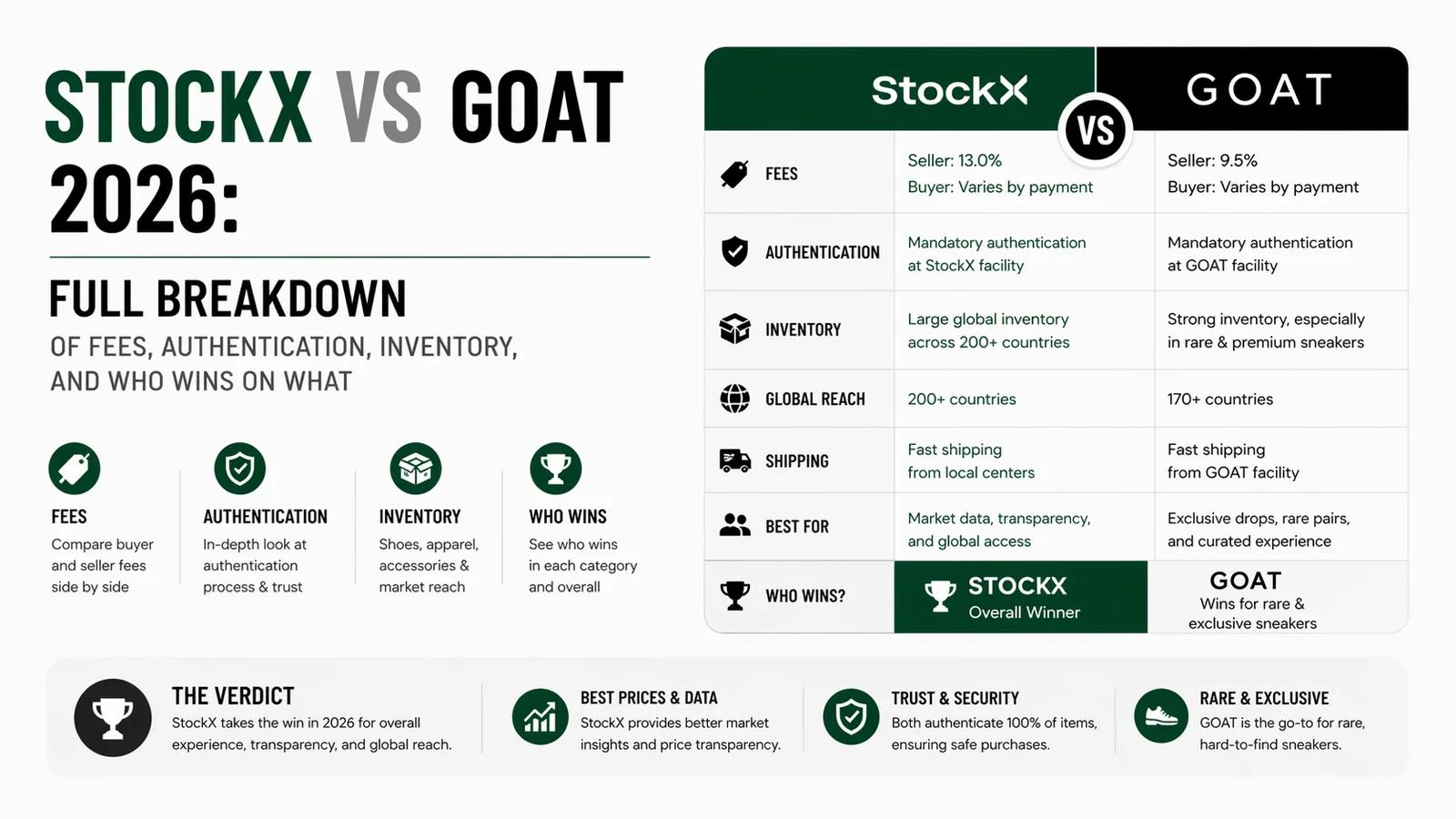
StockX buyer fees in April 2026:
Sneakers and apparel: 9% base fee, dropping to 7% for StockX Pro Level 2 and 5% for Level 3 (requires $5000+ in annual purchases)
Handbags: 8% plus authentication fee of $30 flat
Trading cards: 8% base
Electronics: 4% base
Plus payment processing: roughly 3% on cards, less on Apple Pay or Cash App Pay.
Plus shipping: $15 to $45 depending on destination and item.
Plus import fees outside the US: EU gets VAT automatically calculated and displayed, UK charges 20% VAT + duties, Canada charges GST/HST.
On a $300 sneaker ship to Germany, the math typically looks like:
Ask price: $300
Buyer fee (9%): $27
Processing (3%): $9
Shipping: $25
EU VAT (19% on the full landed value): $68
Total: $429
That $429 total on a pair with a retail price of $215 at Nike. You are paying a 100% premium for:
The release scarcity (that is the resale market's job)
The authentication (some value, maybe 3 to 5% justifies)
The convenience (another 2 to 3%)
The platform margin
The rest is just market friction. Some of this is unavoidable on resale. Some of it is recoverable.
StockX has a no-returns policy. This is the biggest practical pain point.
If you order a size 10 US and they send you a size 10 UK (which happens on EU resellers who accidentally mislabel), you typically cannot return for size. You can open a dispute if the item ships wrong, but the dispute process takes 2 to 4 weeks and not all cases are resolved in the buyer's favor.
Practical fix: always double-check the size conversion on the listing before buying. For Jordans and Nikes, size US is not the same as size UK or size EUR. StockX does show the conversion, but sellers occasionally list the wrong region.
StockX sells "used" items through their flex market and their Consignment Pro program. Authentication confirms the item is real. It does not guarantee the condition matches the listing.
Known issues based on r/SneakerDeals threads through 2025:
Yellowing on classic Air Jordans listed as "deadstock" (technically true, deadstock = unworn, but stored for a decade)
Creases on Dunks listed as "mint"
Box damage not disclosed
If the used item's condition is materially different from the listing, you can dispute. Success rate in public disputes tracked by SneakerSaver Chrome extension: roughly 55%. The other 45% eat the loss.
For that reason: on used items, message the seller through the dispute portal before the item ships if possible. If the listing looks thin on photos, skip it.
Very rare, but here is the process.
Receive the item. Take unboxing photos and a video, start to finish. This is critical. Without them, disputes stall.
Within 3 days of delivery: open a dispute through StockX support (Help Center, "Report a problem with my item").
StockX will ask for photos and a return to their authentication facility. You ship back, they re-inspect.
If confirmed counterfeit: full refund, plus a $50 credit for the inconvenience (StockX policy since 2022).
If they confirm the item is real and you still disagree: you can file a chargeback with your payment provider. This rarely ends well for the buyer because StockX has documented authentication.
Timeline: 2 to 6 weeks for full resolution. Not fast.
The buyer fee is fixed. Shipping is fixed. VAT is fixed. What you can move:
Soleback gives 2% cashback on StockX purchases, applied to the pre-fee purchase price (not the total landed cost). On that $300 sneaker, you get $6 back. That offsets roughly 22% of the buyer fee on a StockX Pro Level 0 account.
Not a huge number on one cop. On 10 cops at $300 average across a year: $60 recovered. That's one StockX shipping charge, or a pack of sleeves if you are crossing verticals into TCG.
StockX Pro is free. You level up automatically based on 180-day rolling purchase volume:
Level 0 (default): 9% buyer fee
Level 1 ($500 in 180 days): 8.5% buyer fee
Level 2 ($1500): 7.5% buyer fee
Level 3 ($5000): 6% buyer fee
If you buy 2 to 3 hype pairs per quarter, you sit at Level 1 or 2 most of the year. That saves more than most "discount codes" can.
StockX runs four predictable discount windows:
StockX Day (April 15 to 22, fee reductions): just ended in 2026 but returns annually
Back to School (mid-August)
Black Friday week
New Year reset (January 1 to 7)
Fees drop by 1 to 2% during these windows. Stack with Soleback cashback.
Apple Pay and Amex Blue Cash Preferred give additional 2 to 6% on online purchases depending on category. Stack with Soleback.
StockX is for you if:
You want a specific release that sold out at retail and you don't want to gamble on sketchy resellers.
You buy 2 or more hype pairs a year and can tolerate 2-week shipping.
You care about authentication on items above $300.
You understand the fee structure and accept it as the cost of the service.
StockX is not for you if:
You need the item this week (retail stores or direct brand sites are faster).
You are buying something in-stock at retail price (JD Sports, Nike.com, and direct retailers save you the markup).
You are on a tight budget and the fees eat the purchase rationale.
You want a return window.
For in-stock retail pairs: go direct to JD Sports, Footpatrol, or the brand site. Direct retailers are always cheaper than StockX on anything that is still in retail stock.
Has StockX ever been caught selling fakes? Yes, a handful of documented cases since 2017, all resolved with refunds plus credit. The Louis Vuitton lawsuit in 2022 was specifically about NFT-linked products, not the physical authentication service. No pattern of systemic failure.
Is StockX safer than Grailed? For sneakers, yes. Grailed's authentication is newer and less built out. For apparel, Grailed has depth StockX doesn't match.
Why does StockX cost more than retail? Because what you are buying is either sold out at retail or never made it to retail in your region. You are paying the market-clearing price plus platform fees. StockX doesn't set the price, bidders do.
Can I trust used items on StockX? Authentication confirms real. It does not guarantee the condition matches the description. Read the listing carefully, check all photos, message the seller if something looks off. Dispute rate on used items is higher than on new.
Does Soleback cashback work on every StockX purchase? Yes, including used items, international shipments, and StockX Pro Level 3 orders. 2% across the board, applied to pre-fee price. Tracking requires active Soleback session, no adblocker on the StockX session.
How long does Soleback cashback take to pay out? 48 hours for confirmation, 30 days hold (StockX return window equivalent, even though StockX doesn't accept returns, this is a standard affiliate settlement period), then withdrawable.
StockX is legitimate. You can buy with confidence up to about the $1000 mark without paranoia. Above that, use a credit card with purchase protection and record the unboxing.
The real cost of StockX is not counterfeits, it is the fee stack. Understanding that stack is worth more than any "is it safe" reassurance. 9 to 13% in fees, plus shipping, plus VAT outside the US. On a $300 buy, you are paying $385 to $430 total landed.
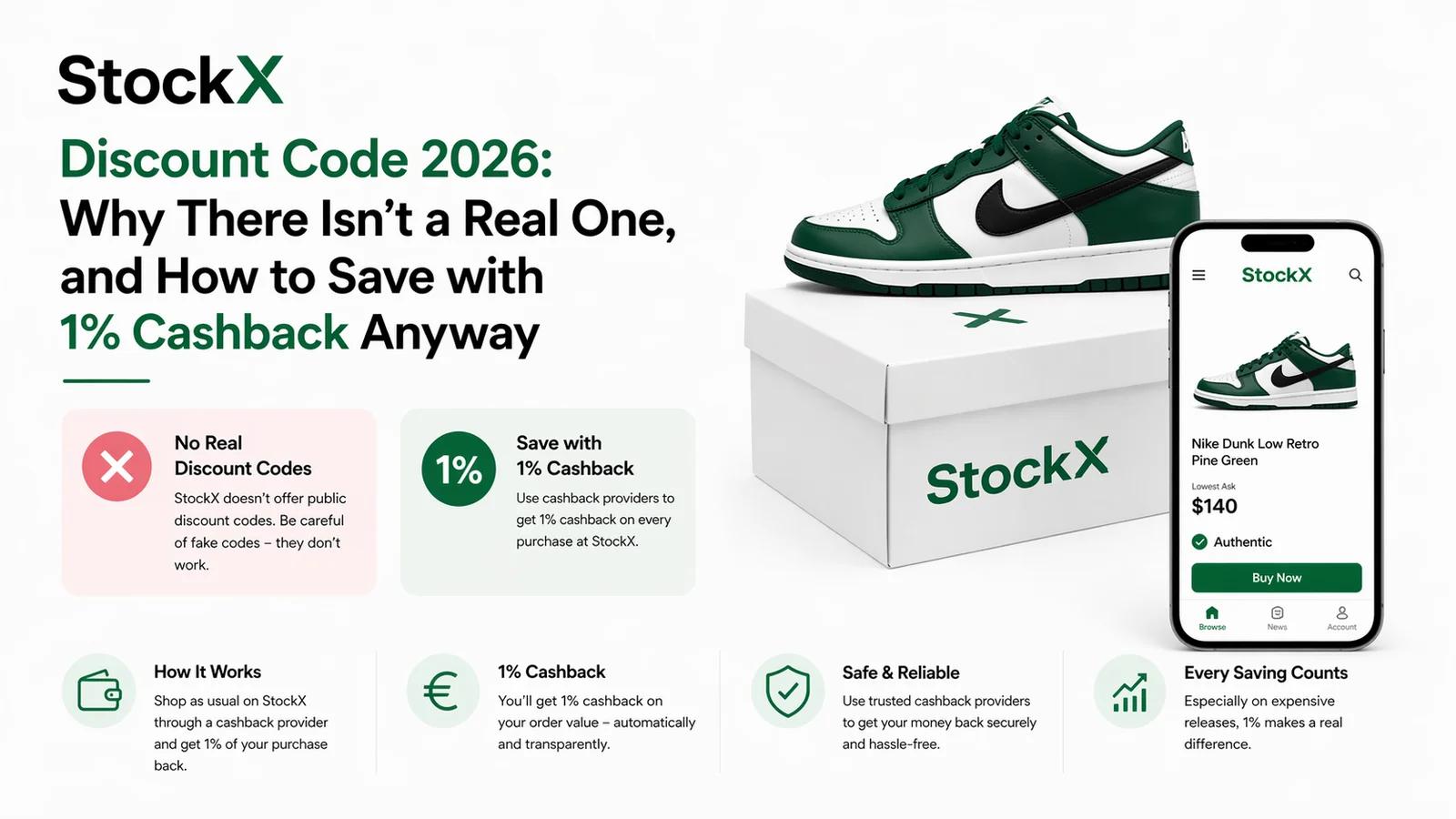
Activate Soleback cashback on StockX before your next cop, 2% on every purchase, offsets about $6 on a $300 pair.
Save on your next purchase
Browse our partner stores for cashback deals and voucher codes
Marcin
Author