
adidas x Pokémon 2026 : collection limitée pour les 30 ans
Aug 3, 2026·Soleback Team

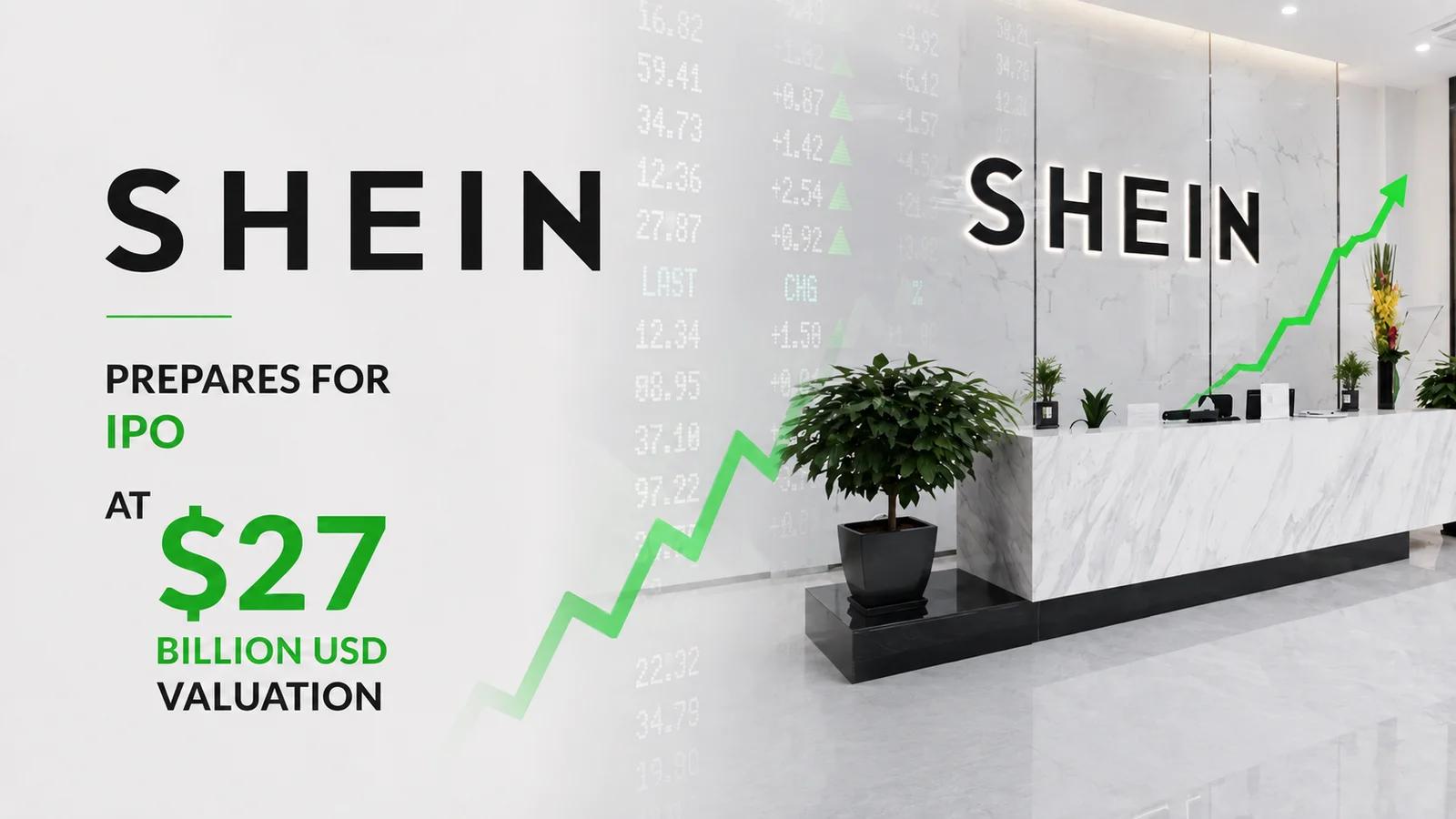
$1.77 billion from the offering, a 1 September debut and the tariffs that broke the cheap-parcel model
Soleback Team
The global offering opened on 24 August 2026: roughly 280 million Class B shares at HK$47.60 to HK$49.50
At the top of the range that raises up to $1.77 billion and values the company at close to $27 billion
That is a fall of around 70 percent from the $98.2 billion it carried in 2022
Trading begins 1 September 2026 under the code 00625, the largest new share sale in Hong Kong this year
The compression comes from slowing growth and changes to US and EU trade policy
Shein Global Holdings is offering roughly 280 million Class B shares in a range of HK$47.60 to HK$49.50. At the top of that range the deal is worth up to HK$13.86 billion, or about $1.77 billion.
Around 10 percent goes to the Hong Kong public tranche and roughly 90 percent to the international placing, with a 15 percent over-allotment option on top. Goldman Sachs, Morgan Stanley and JPMorgan are joint sponsors.
Cornerstone investors have committed roughly $383 million. The group includes Boyu Capital, Tiger Global, General Atlantic and Tencent, though the lists published by different outlets do not fully agree.
In 2022 private market investors valued Shein at $98.2 billion. Through 2023 and 2024 that settled at roughly $64 billion. The current offering puts it just under $27 billion, about 70 percent below the peak.
Against forecast sales that works out at a multiple of roughly 0.7. Zalando trades near 0.4, H&M at 1.1 and Inditex, owner of Zara, at 4.0. The market is no longer pricing in a very high growth scenario.
Revenue growth slowed to 8 percent in 2025, down from 20.7 percent the year before, then fell to 1.1 percent in the first quarter of 2026. Net profit for 2025 dropped 38.7 percent to $2.06 billion.
The first quarter of 2026 brought a net loss of $99 million, against a $395 million profit a year earlier. US revenue fell 14.3 percent over the same period.
One change sits behind most of those figures. The US ended the de minimis exemption for parcels under $800, and the European Union introduced fees on low-value e-commerce imports. Chinese-origin products shipped through the platform to the US now face rates of 10 to 87.5 percent.
Listing does not mean giving up control. The company goes public with a dual-class share structure: a share sold in the offering carries one tenth of the voting power of a founder share. The four co-founders, Sky Yangtian Xu, Maggie Gu, Molly Miao and Tony Ren, keep roughly 90 percent of the votes between them.
Per the prospectus, around 40 percent of proceeds goes to technology, another 40 percent to brand building and the remainder to expansion and general purposes.
The public tranche was open from 24 to 27 August. The final price is due at the end of the month, though sources differ on the day, with some pointing to 28 August and others to 31 August. Trading starts 1 September 2026.
Worth remembering that Hong Kong was not the first choice. Shein previously pursued listings in New York and London, in 2023 and 2024, abandoning both in the face of regulatory and political obstacles.
Up to HK$13.86 billion, or roughly $1.77 billion.
1 September 2026, under the stock code 00625.
A combination of slowing revenue, a first-quarter 2026 loss and the removal of duty exemptions in the US and the European Union.
The four co-founders, holding roughly 90 percent of voting power through the dual-class structure.
The nearest marker is the final price, then the first session. Only that will show whether the market accepts a valuation at 0.7 times forecast sales, or still reads it as too high for a company that posted a loss last quarter.
For the sector it is a test wider than one company: a measure of what a cross-border cheap-parcel model is worth on public markets now that the two largest Western markets have closed the duty loophole.



Save on your next purchase
Browse our partner stores for cashback deals and voucher codes
Soleback Team
Author