UGG
Fashion
1.5%

Eight models, specific seasonal guidance and the thing no other guide tells you
Soleback Team
UGG has travelled a road few brands manage: from a boot half the internet laughed at to a wardrobe fixture. The problem is that the range has grown to the point where the choice is no longer obvious, and most guides skip the most important part: not every pair suits every season.
The Tasman II is the safest first choice, but it is not built for a wet winter
For slush and salted pavements, the Tasman Weather Hybrid and Classic Clear Mini are the ones made for it
The Tazz is the same shoe as the Tasman on a taller sole, which insulates better
Classic UGGs are not waterproof and need proofing spray plus some judgement about which days you wear them
The brand closed fiscal 2026 with $2.7 billion in revenue, up 8 percent year on year
It began in Santa Monica in 1978. Australian surfer Brian Smith, then twenty-eight and studying management at UCLA, noticed you could not buy in the States the sheepskin boots he wore in Australia after every session in cold water. So he started a company and began importing them.
The breakthrough came twice. In 1994 the US team wore them at the opening ceremony of the Lillehammer Games. A year later Smith sold the brand to Deckers Brands.
The real explosion came only in the early 2000s, when Oprah Winfrey put the boots on her "Favorite Things" list and gave 350 pairs to her audience. The effect was immediate: UGG became a wardrobe requirement for Paris Hilton, Kate Moss, Beyoncé, Jennifer Lopez and Cameron Diaz.
Then came a decade of being forgotten. The boots became shorthand for bad taste and the brand dropped out of the fashion conversation entirely.
The return has a specific date. In 2022 Bella Hadid appeared in New York in the Classic Ultra Mini. TikTok did the rest, and within weeks practically every size had sold out. The scale showed on the resale market too: searches for the Tasman on StockX rose 2,340 percent, and for the Tazz 1,340 percent.
Today UGG is the largest brand in the Deckers portfolio. It closed fiscal 2026 with $2.7 billion in revenue, up 8 percent on the previous year, another record. The Deckers group as a whole reached $5.47 billion, up 10 percent.
Deckers chief executive Stefano Caroti named what is driving that: the Tasman family, the Tazz, the Love Pack, the Classic Micro and the heritage slippers. He separately singled out the Lowmel family and the Golden collection, which accounted for more than half of the brand's growth, notable because those are sneaker and sandal models rather than winter boots.
The brand is worn by Kendall and Gigi Hadid, Emily Ratajkowski, Olivia Rodrigo, Selena Gomez, Charli XCX and Post Malone, who has fronted campaigns since 2024. The men's segment is now growing at nearly double the rate of the brand overall.
Classic UGGs are not waterproof. Suede and sheepskin cope badly with wet snow and road salt, so without regular proofing they lose their looks quickly.
That is not a design fault. It is a shoe conceived in California for wearing after a surf, not for February in Manchester. It does not mean they fail in winter. It means they ask two things of you: the care routine set out later in this piece, and giving up on the handful of days a year when the pavements are slush and salt.
That is why season matters as much as style when choosing a model.
Interestingly, the brand concedes the point from the other direction. For autumn 2026 UGG released versions without the sheepskin lining: the Tasman Flex at $165, with light cushioning and a wraparound traction outsole for outdoor wear, the Classic Mini Deconstructed, and a lace-up derived from the Neumel. The maker is literally taking the wool out so the shoes can be worn year-round.
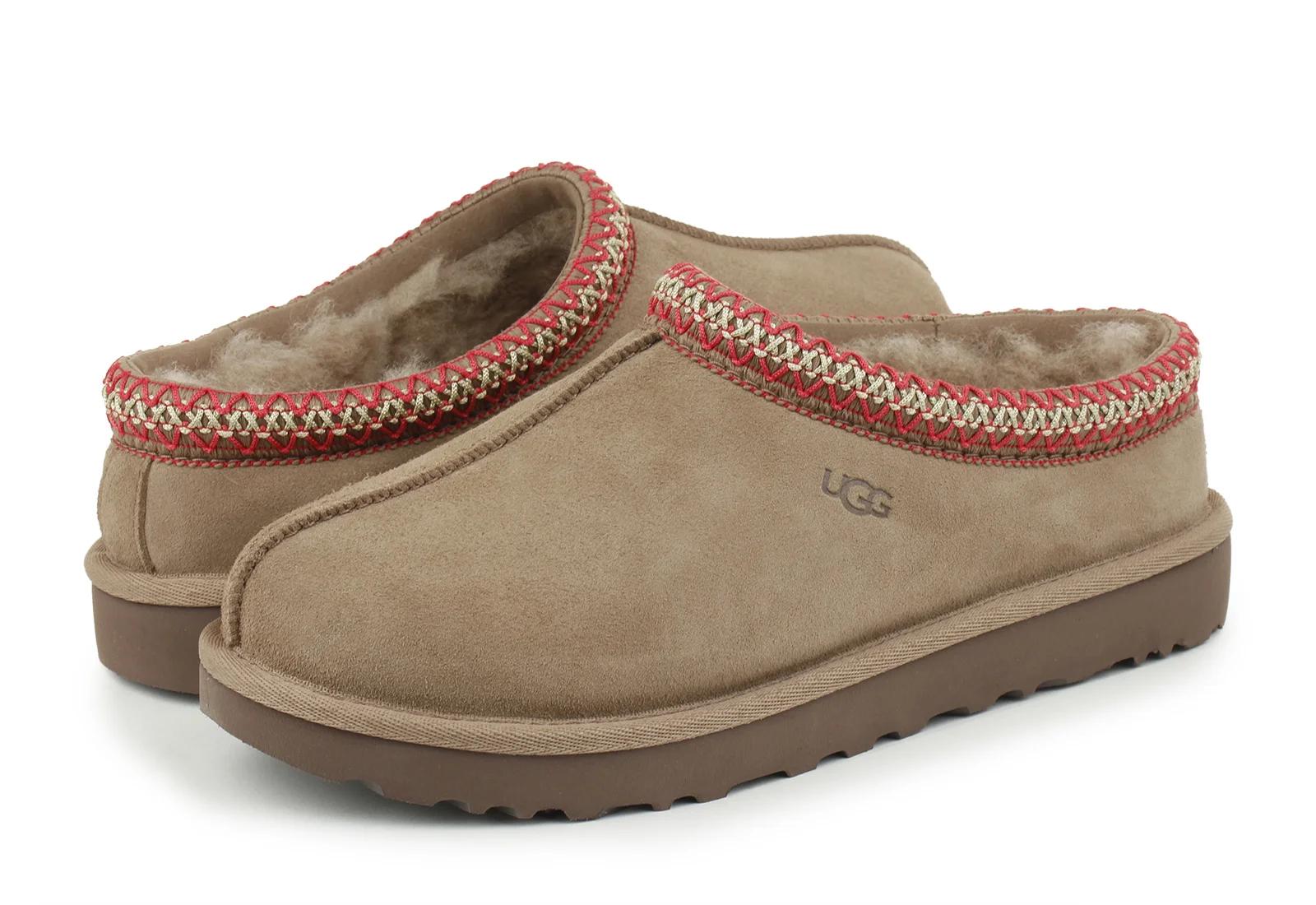
Who it is for: practically everyone. The default choice and the safest decision. Season: spring, autumn, dry winter days. Indoors all year.
A backless suede shoe with the distinctive braided trim at the ankle and a sheepskin lining. A flat sole of around 1.5cm and roughly 400g a pair.
The great strength is versatility: the Tasman works simultaneously as a house slipper and as a shoe for the walk to the shops or a café.
Seasonal limit: the open heel means it turns unpleasant below freezing and in wind. The flat sole insulates poorly against cold pavement, and suede does not cope with slush.
A note on sizing: the Tasman runs slightly loose. If you are between sizes, take the smaller.
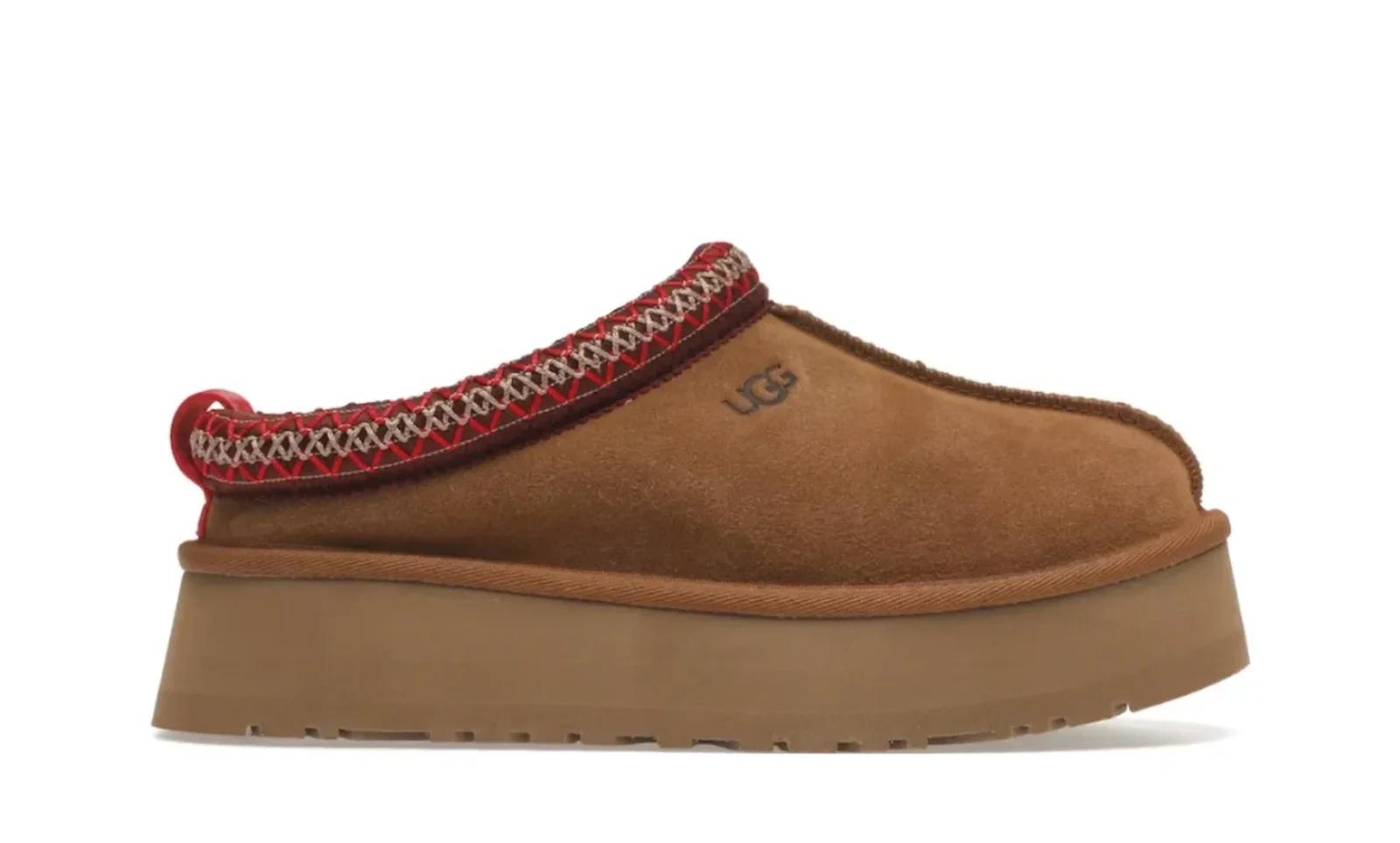
Who it is for: anyone who finds the Tasman too quiet. Season: autumn and dry winter. Better in winter than the Tasman.
It is exactly the same shoe as the Tasman, set on a platform of around 4.5cm instead of 1.5cm.
The effect is considerably bolder, but the Tazz also carries a genuine practical advantage: the thicker sole insulates the foot better from cold ground, and the extra clearance lowers the risk of putting suede into a puddle.
There is also a middle option, the Tasman Platform, at roughly 3cm.
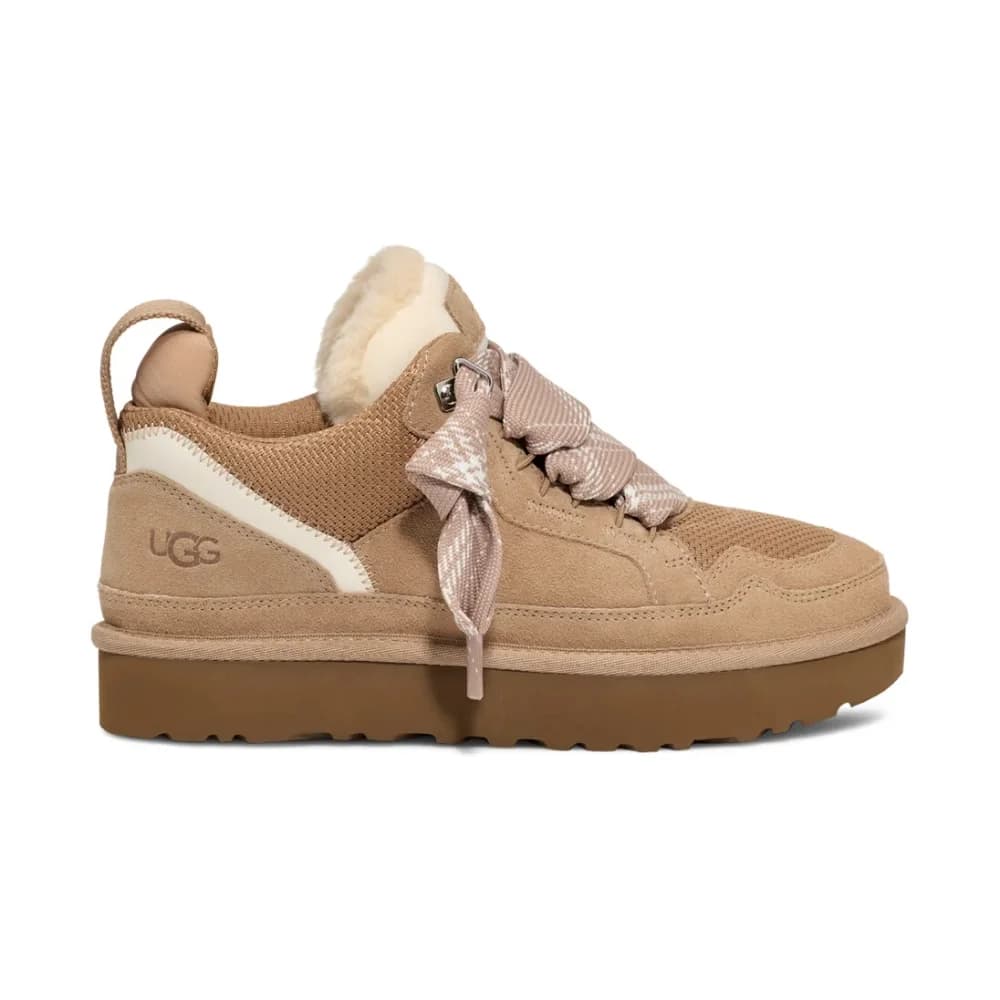
Who it is for: anyone who does not want to look like they left the house in slippers. Season: spring, autumn and winter on dry snow.
The Lowmel is the most shoe-like model here, with sneaker proportions and a low profile, which places it in the wardrobe quite differently from the rest of the range. It works under wide trousers and layered technical clothing.
It handles winter better than its reputation as a transitional shoe suggests. The closed construction holds heat, and in frost and dry snow it copes without difficulty. The limit is slush: when it thaws and the salt comes out, reach for something else and re-proof after any such outing.
UGG is pushing this model hard for autumn 2026, alongside the Lowmel Contrast. Worth knowing: the Lowmel family together with the Golden collection accounted for more than half the brand's growth last year, so this is a direction of travel rather than a niche.
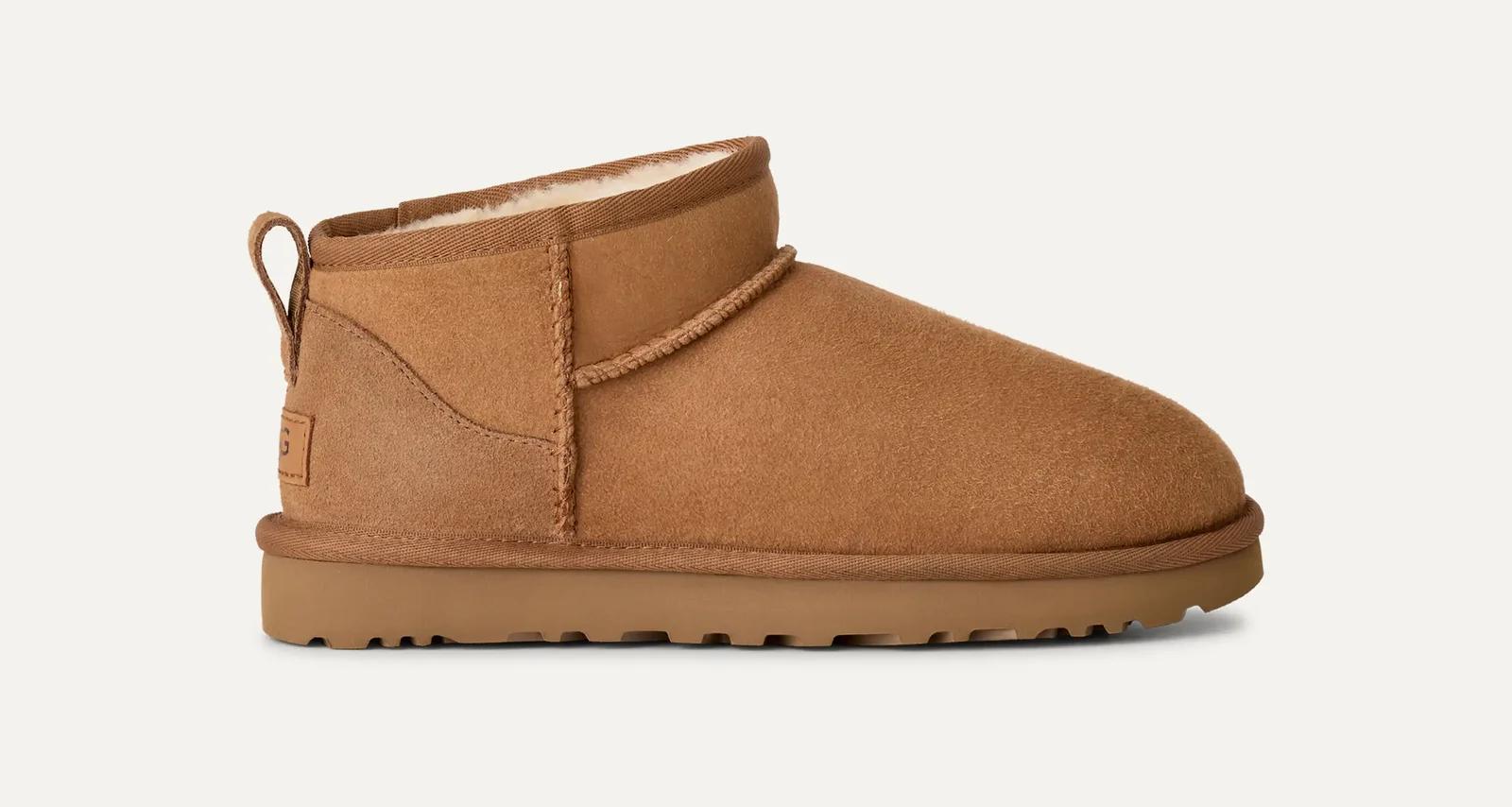
Who it is for: anyone after the classic UGG shape in a shorter form. Season: autumn and winter. Fine on snow, not on slush.
It is the shortened version of the legendary Classic Boot, reaching the ankle. This is the model Bella Hadid wore in 2022.
Unlike the Tasman it covers the whole foot, so it holds heat considerably better, and in frost with dry snow it performs very well. It is still unprotected suede, though, so when it thaws and salt appears it needs attention: regular proofing, and on the worst days simply leaving it in the cupboard.
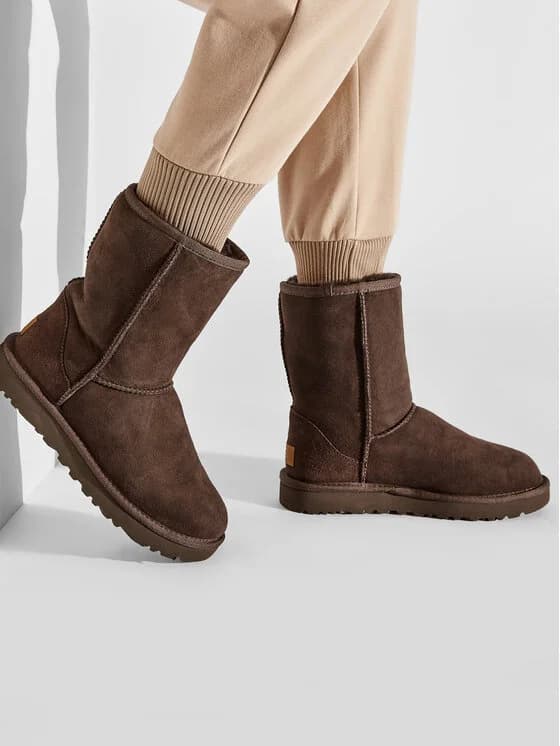
Who it is for: purists and anyone who wants a boot rather than a trend. Season: winter, in frost and dry snow.
The model that built the brand. It reaches above the ankle and is the warmest in the core range. It performs in real frost, meaning where the snow stays dry rather than turning into salted slush.
Who it is for: anyone after a slipper rather than a shoe. Season: all year, but within four walls.
Scuffette II is the classic backless slipper and the cheapest thing in the range. Coquette is its smarter version, and Cozy the soft knitted model.
These have a sole suited to short trips outside, but in practice they are indoor footwear.
Who it is for: anyone who wants to wear UGG from November to March. Season: winter, rain, slush, wet snow.
From a British climate perspective this is the most important model in the whole line-up, and the one guides most often overlook.
The Weather Hybrid is the Tasman in a waterproof build, with a rubber shell in the style of a wellington, sealed seams, an elasticated collar and Spider Rubber inserts for grip. This is the model Post Malone fronted.
Why does that matter? Because classic suede in a wet winter demands attention: proofing every few weeks, dealing with salt the same day, and staying in when it is slushy. The Weather Hybrid removes that obligation, because the weather simply does not concern it.
The alternative is the Classic Clear Mini with a transparent waterproof coating, rated to around minus two degrees.
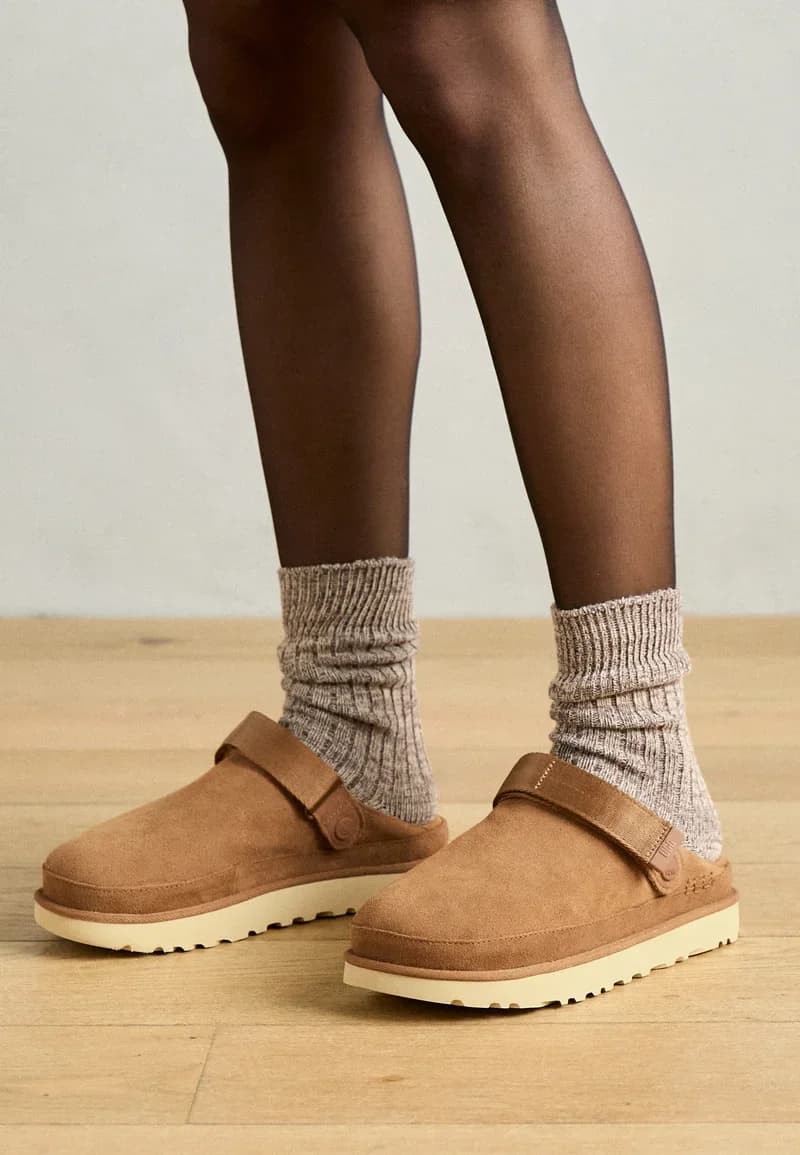
Who it is for: anyone after something beyond the obvious choice. Season: spring and autumn.
A clog form with a sheepskin interior, easier to get on than the Tasman and more distinctive visually. It belongs to the Golden collection, the same one that with the Lowmel drove most of last year's growth.
Also worth noting is the PeakMod, a chunky clog with sneaker styling aimed mainly at men and sitting within the uglycore aesthetic.
Spring and autumn: Tasman II, Tazz, Lowmel, Goldenstar Clog, Tasman Weather Hybrid, Classic Clear Mini.
Summer: the indoor models only, meaning Scuffette, Coquette and Cozy. Sheepskin regulates temperature better than people expect, but in heat it will still be too warm. The exception is cool evenings by the sea, which is precisely what the shoe was made for.
Dry winter: Tazz, Lowmel, Classic Ultra Mini, Classic Short II, Tasman Weather Hybrid, Classic Clear Mini. The Tasman II with care only, because of the open heel.
Wet winter: the Tasman Weather Hybrid and Classic Clear Mini without hesitation. The other models will manage too, but only with regular proofing and some judgement about the day. When it is properly slushy, reach for something else.
This is the section where you genuinely save money. Suede forgives little, but with the right routine a pair will comfortably last several years.
Proof them. This is not optional, it is a prerequisite. Use a product made for suede and nubuck, applying it evenly from around 20cm away. Leave to dry for several hours at room temperature.
Repeat the proofing every three to four weeks during heavy wear. The protective layer wears off faster than you can see.
Brush them dry with a suede brush. A brass or rubber brush lifts dust and restores the nap. Work the brush in one direction, not back and forth.
Leave them to dry at room temperature. Never on a radiator, a heater or with a hairdryer, because high heat hardens and shrinks the leather and dissolves the adhesive holding the sole.
Stuff them with paper so they hold their shape. Not newspaper, because printing ink can transfer onto light suede.
White salt marks are not a cosmetic issue, because salt dries out and destroys the leather structure from within.
React immediately, not a week later. Mix water and white vinegar in equal parts, dampen a soft cloth without soaking the boot, and dab the mark gently. Then leave to dry and work through with the brush.
Do not machine wash. The sheepskin will felt and the shoe will lose its shape permanently.
Do not soak the boots. Even when cleaning, work with a damp cloth rather than running water.
Do not dry near a heat source.
Do not store in a plastic bag. The leather has to breathe or mould will develop.
UGG was designed to be worn barefoot, which over time produces a predictable result. The fix is simple: tip bicarbonate of soda inside, leave overnight and shake it out in the morning.
Rotating pairs helps too, because after a full day a boot needs around twenty-four hours to dry from the inside. Wearing the same pair daily is the quickest route to ruining the lining.
Before putting them away for summer, clean and dry them thoroughly, stuff them with paper and keep them somewhere dry and airy, out of sunlight. Direct light bleaches suede unevenly, and once a difference in shade appears it cannot be undone.
Below are the retailers stocking the brand, each with a link that returns part of the order value.
UGG official store, the fullest range and every colourway
schuh, strong on sizing across the classic models
Office, reliable for the Tasman and Classic
Selfridges, the premium end with occasional exclusives
Flannels, good coverage of the newer silhouettes
Debenhams, frequent promotions
ASOS, broad size range and regular discounting
A narrower selection, but limited versions turn up here more often:
Before you click: the route through Soleback has to be the last step before the shop, and cashback clears once the returns window closes.
One practical note about this brand. The Tasman Weather Hybrid, the sensible pick for a wet winter, is best sought at the official store and the sneaker retailers. The high-street chains usually carry it in a narrower size range than the classic models, and sometimes not at all.
Size. The Tasman and Tazz run loose, so take the smaller when in doubt. The rest of the range fits true.
One pair rarely covers a year. A realistic set is a Tasman or Tazz for spring and autumn plus a Weather Hybrid for winter. You can get through February in classic suede, but at the cost of more frequent care and a few days when they stay in the cupboard.
UGG offers no arch support. The sheepskin lining is soft and pleasant, but this is not an orthopaedic shoe. With plantar fasciitis you need a construction with real support.
The Tasman II. The most versatile, works indoors and out, and the safest choice for anyone who does not yet know the range.
The classic models are not. Only the Tasman Weather Hybrid and the Classic Clear Mini are.
The Tasman Weather Hybrid, with the Classic Clear Mini as the alternative. The other models work too, but they need regular proofing and giving up the slushiest days.
It is the same shoe on a taller sole, around 4.5cm instead of 1.5cm. The Tazz insulates better from cold ground and reads bolder.
The Tasman and Tazz do, so take the smaller size when in doubt. The rest of the range fits true.
With equal parts water and white vinegar applied on a damp cloth, never by soaking the boot. React the same day rather than a week later.
At the official UGG store plus schuh, Office, Selfridges, Flannels, Debenhams and ASOS, along with JD Sports, size?, Footasylum and Sports Direct.
Tasman II, first pair and versatility, for spring and autumn
Tazz, bolder look and better insulation, for autumn and dry winter
Lowmel, sneaker aesthetics, for spring, autumn and dry winter
Classic Ultra Mini, the classic in shorter form, for autumn and winter
Classic Short II, the original and maximum warmth, for winter
Scuffette, Coquette and Cozy, indoors only, all year
Tasman Weather Hybrid, rain, snow and slush, for winter
Goldenstar Clog, the less obvious choice, for spring and autumn
Save on your next purchase
Browse our partner stores for cashback deals and voucher codes
Soleback Team
Author